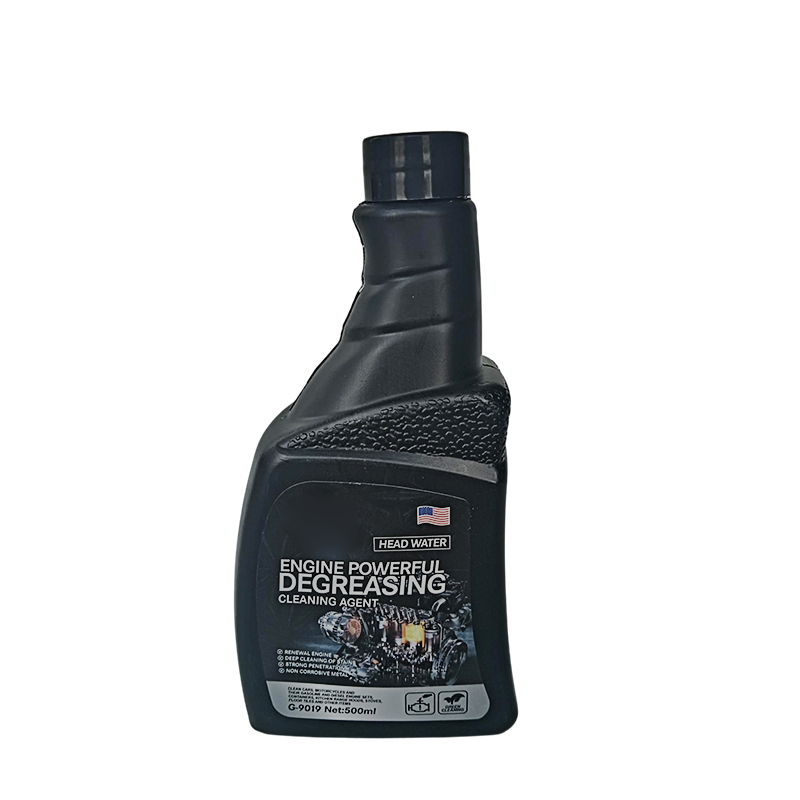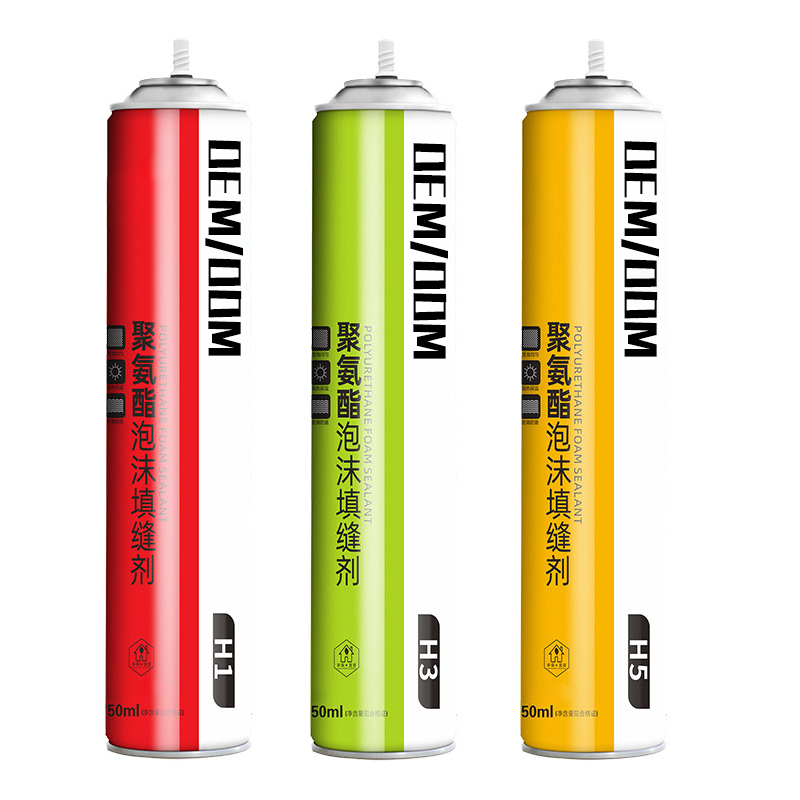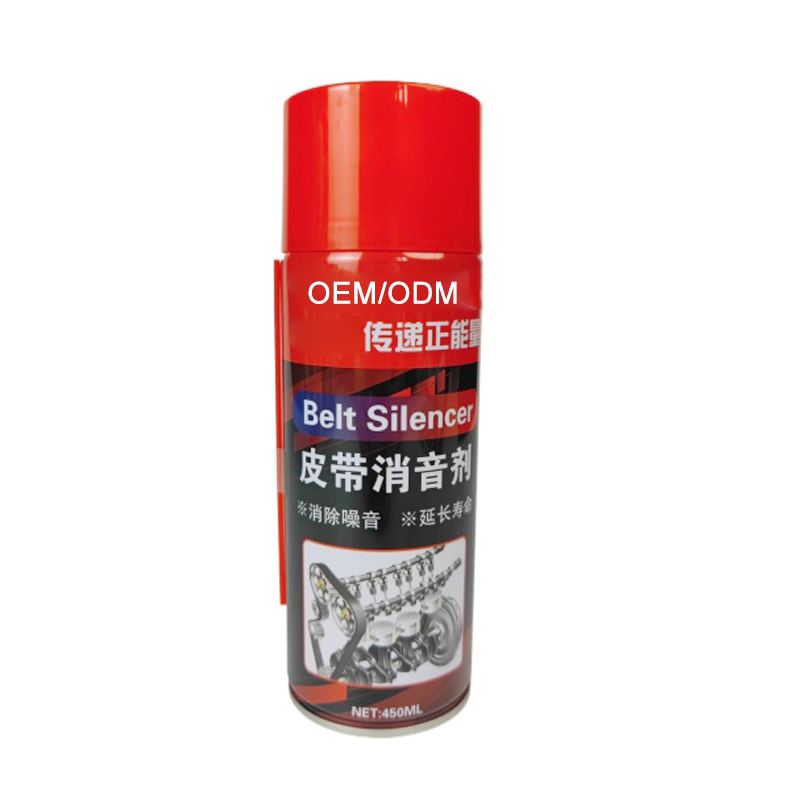
TL;DR
In short: Bulk aerosol buying is three decisions — how many SKUs, how deep per SKU, and how the container moves — and negotiating only the unit price is how the margin disappears at the port. Whether the volume pays you back at all is the question we take up in the profit side of aerosol manufacturing.
- Count in SKUs, not cans: Every artwork needs its own plate set, and tinplate printers coat and cure sheets in minimum batches. Change the actuator or the fragrance and you have a second SKU with its own setup.
- The price curve flattens early: The gap between 5,000 and 20,000 units per can is real money. The gap between 50,000 and 60,000 is a rounding error.
- Price validity: A filled can is mostly steel and gas, both of which trade as commodities. Quoted prices are typically held for 30 days.
- Production: A 15–20 day mass production calendar runs in parallel with dangerous goods paperwork that has to be finished before any vessel is booked.
- Classification: Flammable contents ship as UN 1950 Class 2.1 under the proper shipping name “Aerosols, flammable (each not exceeding 1 L capacity)”. US 49 CFR 173.306 and Europe's ADR grant limited-quantity treatment only for inner packagings up to 1 L.
- What volume will not buy: Not every freight forwarder carries Class 2.1 cargo. A 72,000 can order with the wrong forwarder can lose more margin in eleven days of port storage than the whole negotiation won.
Every season we watch some version of the same bulk-order mistake, so we have folded the usual errors into one composite buyer: a distributor in Lagos ordering 72,000 cans of carburetor cleaner. He spends most of October negotiating the unit price. Then the container sits eleven days at the port — his forwarder has never booked Class 2.1 cargo, and the dangerous goods declaration names the wrong consignee. Storage, re-issued documents and a missed vessel cutoff eat roughly $4,200 of the margin he fought for. Nothing in the factory's price was wrong. The mistake was treating bulk aerosol spray products as one decision — price — when they are three.
Ordering in bulk works as a sequence. The MOQ decides whether a run can exist at all. The volume tier sets what each can actually costs. A production calendar of 15 to 20 days runs parallel to dangerous goods paperwork that must be finished before any vessel is booked. The container itself — FCL or LCL, palletized or loose — decides how much of that unit price survives to your warehouse. Aerosol logistics is the step where most of the negotiating gets undone. Walk the steps in order and a bulk order is predictable. Skip one, and the container pays for it.
Step One: MOQ, the Floor Under Every Run
Every aerosol line has a smallest sensible run, and it is not greed — it is arithmetic. Before the first can is filled, a factory has already committed costs that do not shrink with quantity:
- Print plates. Each artwork needs its own plate set, priced the same whether you fill 500 cans or 50,000.
- Minimum print runs. Tinplate printers coat and cure sheets in minimum batches; below that, hitting a color standard stops being economical.
- Component lots. Valves, mounting cups, gaskets and actuators arrive from upstream suppliers in cartons of thousands. A run smaller than the carton count leaves you paying for parts sitting in someone's warehouse.
- Blending batch minimums. A mixing tank has a lowest workable charge; concentrate made below it wastes labor, solvent and lab tests.
- QC overhead. Compatibility checks, retention samples and first-article inspection cost the same hours whatever the run size.
That is why MOQ 5,000 units per SKU is the standard starting line at Midwel — and why "SKU" is the honest unit of counting. One size, one formula, one artwork. Change the actuator or the fragrance and you have a second SKU with its own plates and component lots, even if the can body is identical. Buyers who count total volume across variants expect discounts that never arrive; buyers who count SKUs get quotes that survive contact with the production floor.
For a longer treatment of why these minimums exist and how to negotiate them, our guide to aerosol OEM MOQ covers the negotiation side.
Step Two: How the Unit Price Really Moves with Volume
The cost to manufacture aerosol product lines is the question most buyers open with, and it has no single answer. Unit price in bulk aerosol spray products is a curve, and most of the drop happens early. The table below shows where the money actually changes as quantity climbs.
| Volume tier | What you are mostly paying for | Where the next saving comes from |
|---|---|---|
| Samples (a few cans to ~100) | Lab time, manual line setups, courier | Approving the spec so production can start |
| 5,000–19,999 units | Plates, changeover and QC spread over the smallest run | Spreading fixed costs over more cans |
| 20,000–49,999 units | Full-price printed cans, small component lots | Printed-can price breaks and bigger component orders |
| 50,000–99,999 units | Optimized pack-out, fuller component orders | Better tinplate pricing at sheet volume |
| 100,000+ units | Commodity inputs — tinplate, LPG, solvent | Little left to optimize; price now tracks raw materials |
Two practical notes. The curve flattens: the gap between 5,000 and 20,000 units per can is real money, the gap between 50,000 and 60,000 is a rounding error. And below roughly 50,000 units the price is driven by things a factory controls; above it, by things nobody controls. A filled can is mostly steel and gas — tinplate and LPG trade as commodities — which is why we hold quoted prices for 30 days, long enough to plan a shipment and short enough that a swing in steel or propane does not turn a good quote into a promise we cannot keep. Whether you buy EXW, FOB or CIF changes who pays the freight; it does not change the factory curve underneath.
Step Three: The Production Calendar, Deposit to Loading
Filling is fast; everything around filling takes the time. A typical bulk run moves like this:
| Days | What happens | What it needs from you |
|---|---|---|
| Day 0 | Specification locked, deposit received, print plates cut | Approved spec sheet, artwork files |
| Days 1–3 | Print proof produced on actual tinplate | Color sign-off — a photo on a screen is not a color standard |
| Days 7–15 | Samples filled and couriered for approval | Physical sign-off, any last formula tweaks |
| After approval | Can printing run starts on the press | — |
| Days 22–35 from deposit receipt | Mass filling: blending, filling, gassing, crimping, 100% checkweighing, hot-water leak bath | — |
| Final days | AQL inspection, DG document chain assembled, vessel booked | Discharge port and consignee details — the correct ones |
| Loading day | Container stuffed, sealed, photographed | Third-party inspector welcome if you want one |
The two long poles are can printing and paperwork, not filling. A line can fill tens of thousands of cans in a shift; it cannot fill them before the printed cans arrive and the documents exist. Buyers who approve proofs and samples quickly routinely load at the early end of that window. Buyers who sit on a color sign-off for two weeks own the delay — and usually blame the factory for it.
Step Four: Dangerous Goods Paperwork — Finished Before the Container Books
Aerosols ship as UN 1950, Class 2.1 when the contents are flammable. The proper shipping name reads "Aerosols, flammable (each not exceeding 1 L capacity)," as recorded in CAMEO Chemicals, the NOAA hazard database. That classification chains through everything downstream: labels, packaging certificates, declarations, and which freight forwarders will quote you at all.
We keep a separate, buyer-level walkthrough of UN1950 shipping requirements — what LQ and full DG mean, and which documents your forwarder actually files — if you want the full picture before booking.
The document chain has an order, and the order is the point:
- SDS written from the actual formula — not a template with your product name pasted in.
- UN performance packaging certificate for the specific can-and-valve combination, issued to the shipping entity.
- Dangerous goods declaration referencing that certificate.
- Vessel booking — only after the first three exist.
Reverse the order and you get the Lagos opening again: a container that arrives at the port gate before its documents do, then waits at storage rates. One detail that saves money on smaller cans: transport regimes carve out relief for modest quantities. The US rule at 49 CFR 173.306 excepts qualifying small aerosol shipments from full packaging requirements, and Europe's ADR grants limited-quantity treatment for inner packagings up to 1 L. Relief softens transport requirements; it never removes classification, marking, or the duty to ship a sound, tested pack. Treat these provisions as a discount a competent DG desk applies on purpose, not a loophole a salesperson discovers by accident.
A last line that decides timelines: not every freight forwarder carries Class 2.1. Ask before you book — and before you sign a contract that leaves freight entirely to "your side," because the factory's DG desk can usually pre-clear the paperwork your forwarder will need.
Step Five: FCL, LCL, and What a Container of Aerosols Actually Looks Like
Pricing decides what a can costs at the factory gate; the container decides what it costs on your floor. FCL aerosol shipping is the default for anything past a sample or a top-up, and LCL aerosol bookings are the exception and are priced accordingly. Bulk aerosol spray products move in two honest ways:
| FCL (full container) | LCL (shared container) | |
|---|---|---|
| Carrier acceptance for Class 2.1 | Standard, with DG declaration in place | Most consolidators refuse; hazardous-LCL is rare and priced accordingly |
| Cost per can | Lowest at bulk volumes | Often two to three times FCL on a per-can basis |
| Handling | Loaded once at the factory, opened at destination | Every consolidation point is another drop for pressurized cans |
| Transit predictability | Sails on your booked vessel | Waits for a compatible consolidation |
| Best suited for | Bulk orders of 5,000 units and up | Samples and small top-ups on small-can LQ provisions |
Rough planning numbers: a 20-foot container of palletized 52–65mm cans typically carries somewhere between 50,000 and 90,000 filled units, depending on diameter, height and pack-out. Forty-five-millimeter minis go higher; 70mm large formats lower. Weight is rarely the binding limit — the volumetric space usually fills first — though it comes close with large, heavy formats, which is why a pack-out drawing belongs in the quotation. On the floor, pallets get edge boards, strapping and top frames, and cans travel upright, a precaution worth keeping even on routes where the rules would allow otherwise.
The destination adds its own layer. Saudi-bound containers move with SASO conformity documents; EU-bound with REACH positioning; US-bound under DOT rules. None of this is difficult when it is planned at the quotation stage. All of it is expensive when it is discovered at the port.
How Midwel Runs Bulk Aerosol Programs
The short version of the setup behind your order: a 98,796㎡ plant in Dingzhou run by our manufacturing partner (est. 2003), with annual capacity above 200 million cans. Because blending, can printing, filling and QC sit inside the same plant, the document chain in Step Four is assembled while the cans are being filled — the certificate references the batch that is actually inside the container, not a batch somebody reconstructed after the vessel left.
Bulk aerosol spray products concentrate in three categories here: industrial maintenance sprays such as degreasers and carburetor cleaners, automotive care lines, and household and personal care products. Recent runs cover the spread: a Saudi distributor scaling imports on a SASO-ready file, a German private-label brand that reached shelf in six weeks on REACH paperwork, and a Brazilian automotive aftermarket program built around carburetor cleaner. Commercial terms stay plain — MOQ 5,000 units per SKU, sampling in 7–15 days, mass production in 15–20 days from order confirmation, prices held for 30 days — and the certification file (ISO 9001, ISO 14001, UN, CE, DOT, RoHS, SASO, REACH) travels with the first quotation rather than after the first objection.
Questions Buyers Ask Before a Large Order
Can I split the 5,000-unit MOQ across two variants?
Total volume, yes; per SKU, no. Each variant with its own artwork or component set needs its own plates and minimum component lots, so each SKU carries the floor. Variants that share artwork — a fragrance change behind an identical label, an actuator swap on the same print — can often share the run. Send both variants together and we quote them as one plan.
How many aerosol cans fit in a 20-foot container?
For bulk aerosol spray products in common 52–65mm formats, a 20-foot container typically carries between roughly 50,000 and 90,000 filled cans — higher for 45mm minis, lower for 70mm large cans — depending on pack-out. Send your can size and carton configuration and we return an exact load plan with the quotation, palletized to suit your destination's handling equipment. Every quotation is built from the production schedule of the aerosol OEM/ODM manufacturer that will run your order, so the lead time you see is the line's, not a reseller's guess.
Can I ship aerosols LCL to top up between bulk orders?
Usually not for Class 2.1. Most consolidators refuse flammable aerosols, and the hazardous-LCL services that do exist price at a per-cubic-meter premium that erases the savings on small volumes. Small cans may move under limited-quantity or small-quantity relief depending on the route. The cheaper habit is folding top-ups into the next full container.
How long is a bulk quotation valid?
We hold quoted prices for 30 days. A filled can is mostly steel and LPG, and both trade as commodities; a quote without a validity window is either padded or written to be renegotiated later. For large programs we can lock input prices across the production window itself — ask for that when you request the quote.
What paperwork do I need to clear aerosols at my port?
The core set: commercial invoice, packing list, SDS, UN performance packaging certificate, dangerous goods declaration, certificate of origin and marine insurance. Destination-specific layers sit on top — SASO conformity for Saudi Arabia, REACH positioning for the EU. If your customs broker has cleared aerosols before, hand them the document list at booking. If not, ask our DG desk to talk to them before the vessel sails, not after it docks.
The Next Order, in the Right Order
In the composite story, the same buyer's second order went differently. Before asking for a price, he sent four things: the SKU list with annual volumes, the discharge port, the consignee entity exactly as registered, and his forwarder's name. His container loaded inside the production window and cleared without a single phone call. The unit price barely moved from his first order. What changed was everything around it.
If you are sourcing bulk aerosol spray products, send us the same four things and we will return an itemized quotation with the load plan and the document chain attached — get a free quote to start, or request a sample first and judge the cans on your own warehouse floor.
FAQ: Bulk Aerosol Spray Orders
What is the MOQ for a bulk aerosol spray order?
Ready-stock private label runs start from 5,000 pcs; custom OEM programmes typically start at 20,000 pcs per SKU. Bulk aerosol pricing is quoted per SKU against annual volume rather than per individual order.
How many aerosol cans fit in a container?
It depends on can diameter, height and pallet configuration. The load plan is built from the actual can size and supplied with the quotation, because the number of cans per pallet drives both the freight cost and the price per unit.
What does a supplier need in order to quote a bulk aerosol order?
Four things: the SKU list with annual volumes, the discharge port, the consignee entity exactly as registered, and the forwarder's name. With those four, the quotation, load plan and document chain can be prepared together instead of chasing gaps afterwards.
Ordering in bulk is the easy half; storing and picking it needs a hazmat-capable partner - see our guide to choosing a 3PL for aerosols.