
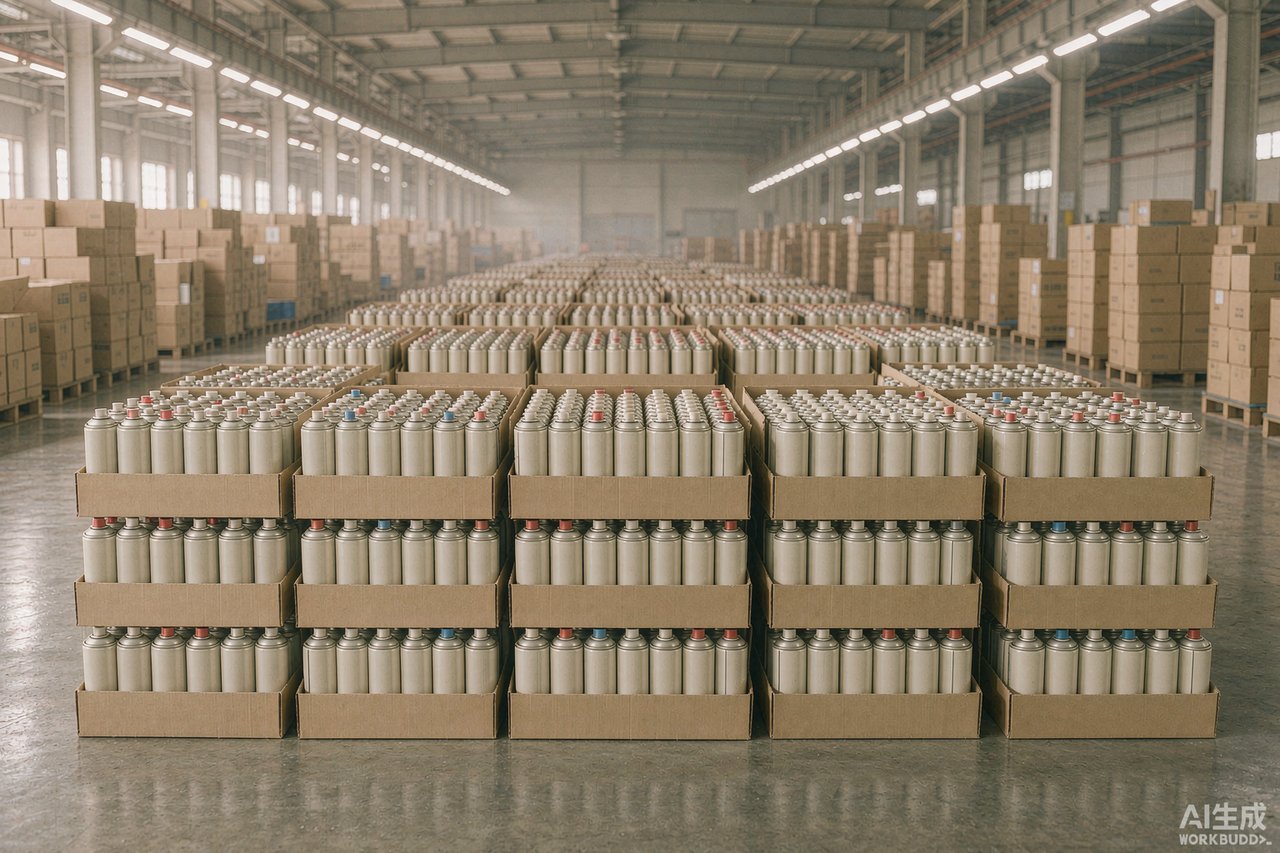
When a buyer first emails an aerosol factory in China, one of the first replies often contains a number that sounds arbitrary: "MOQ 5,000 pieces." Another factory says 10,000. A third says 20,000. The same product idea, three very different gates.
That number is not random. It is built out of real production constraints, and understanding those constraints is the fastest way to get a better answer.
What Drives the MOQ for Aerosol Products?
Unlike simple molded plastics or assembled electronics, an aerosol SKU is a stack of minimum-order layers:
- The can. Empty aerosol cans are usually purchased in bulk lots. A standard 65 mm × 158 mm tinplate can is not made one-by-one for your order; the metal supplier runs coils and prints lithography in batches.
- The valve and actuator. These look small, but they are precision parts. Valve makers have their own MOQs, often by size and spray type. Switching from a standard spray button to a foaming actuator can reset the count.
- The propellant and formulation. Filling a tank, purging lines, and running stability tests all take setup time. A factory does not want to do that for 500 cans if the same line can run 5,000 with the same effort.
- Labels and cartons. Even if the product is identical, your private label means a custom print run. The printer has a setup charge and a minimum sheet size.
Add these layers together and the factory's quoted MOQ is usually the largest single layer, not a negotiation starting point.
What a Realistic Aerosol MOQ Range Looks Like
Numbers vary by country, category, and factory size, but in our experience with Chinese OEM aerosol lines the ranges look roughly like this:
| Product type | Typical MOQ range | Why |
|---|---|---|
| Car care sprays | 5,000 – 10,000 pcs | Standard cans and valves; competitive supply chain |
| Household cleaners | 10,000 – 20,000 pcs | Higher formulation testing and registration load |
| Insecticide / pesticide | 20,000+ pcs | Active ingredient sourcing and compliance batch sizes |
| Cosmetic aerosols | 10,000 – 30,000 pcs | Bag-on-valve or aluminum cans raise material minimums |
These are starting points, not laws. A factory that already runs a similar formulation every week can often slot your order in with a lower MOQ.
How to Negotiate a Lower MOQ Without Cutting Corners
You cannot talk a factory below its material minimums, but you can sometimes change the shape of the order:
- Ask for a mixed SKU container. If you want 3,000 units each of four SKUs, the total 12,000 may be accepted even though each individual SKU is below the normal minimum.
- Start with a standard formulation. Custom chemistry needs stability testing. A factory's existing base formula removes that uncertainty and lowers the effective MOQ.
- Pay tooling or label setup separately. Sometimes the MOQ is high because the factory is hiding setup costs inside the volume. Separate them and the volume gate drops.
- Accept a longer lead time. Let the factory combine your run with another customer's similar product.
The red flag is a factory that drops the MOQ to nothing without changing anything else. That usually means corners are being cut on testing, filling pressure, or can quality.
Where Midwel Typically Starts
At Midwel, our normal starting MOQ for standard tinplate aerosol products is around 5,000 pieces per SKU, with flexibility for mixed-container projects. For new formulations or products that need extra compliance work, we quote based on the real material and testing minimums, not a round number pulled from a price list.
If you are comparing suppliers, the article on how to choose an aerosol manufacturer in China covers the questions that expose whether a quoted MOQ is based on facts or assumptions.
Before You Sign, Check This
- Is the MOQ driven by the can, the valve, the label, or the formulation?
- Does the quote include a separate tooling/setup fee, or is it buried in the volume?
- What happens if you need a reorder that is smaller than the first MOQ?
- Will the formulation be stability-tested at the same batch size?
Getting clear answers to those four questions usually tells you whether the supplier is a real manufacturing partner or just a sales desk.


