
TL;DR
In short: Most private-label air fresheners and cleaners fail on shelf because the formula behind them is the same one standing behind a dozen other brands. A custom formula changes the scent profile, the spray character and the dry-down time together, for one product.
- Start from a performance brief: Not a chemical spec sheet. Price tier, target market, shelf life, output rate, particle size and any VOC ceiling that applies to the destination.
- Two stages: A performance brief, then two to three candidate formulations from the lab, usually with one or two rounds of feedback before the specification is locked.
- Timing: From performance brief to locked specification, typically 3–4 weeks.
- Entry point: Midwel's standard MOQ for custom formulation is 20,000 units per SKU.
- The capability behind it: The plant we represent runs its own R&D laboratory and holds ISO 9001, ISO 14001, UN packaging certification, CE, DOT, RoHS, SASO and REACH.
- What it will not fix: A custom formula does not rescue a product with no distribution or no defensible price point. It only pays back where a customer can compare one can against another and feel the difference.
Here is the pattern that sends brands looking for a custom formula aerosol manufacturer. A private-label air freshener is sourced from a generic contract filler who runs the same off-the-shelf lavender base for a dozen different brands. On shelf it smells identical to three competitors, customers buy it once, and it never earns a second purchase. The fix is not a new scent name — it is a distinct scent profile, a propellant ratio adjusted for a finer mist, and a dry-down time that matches the retail brand standard, all formulated together for that one product.
That gap — between a can that does the job and a can that builds a brand — is where a custom formula aerosol manufacturer earns its keep. The European Aerosol Federation (FEA) reported that global aerosol production reached approximately 16.5 billion units in 2023, with personal care and household products accounting for over 60% of that volume. In a market that size, formulation differentiation is not a luxury. It is the single most effective lever a private label brand has to escape price-driven commoditization.
What a Custom Formula Aerosol Manufacturer Actually Changes
Aerosol formulation is not a single recipe. It is a system of four interdependent layers — concentrate, propellant, solvent, and packaging — and adjusting one without recalibrating the others produces everything from weak spray patterns to can corrosion. Here is what a custom formula aerosol manufacturer controls:
| Formulation Layer | What It Controls | Why Customization Matters |
|---|---|---|
| Active concentrate | Performance (cleaning power, scent intensity, lubricity) | Off-the-shelf formulas use generic actives at middle-of-the-road concentrations; custom lets you tune strength for your price tier |
| Propellant system | Spray pattern, particle size, can pressure | LPG blends, DME, HFC-134a, or compressed nitrogen each produce different mist fineness and empty rates |
| Solvent carrier | Evaporation rate, residue, skin feel | Water-based vs. solvent-based changes dry-down time, surface safety, and VOC classification |
| Valve and actuator | Output rate, spray shape (cone, stream, foam) | A formula optimized for a standard valve will sputter through a foam valve — the custom manufacturer tests both together |
| Can interior coating | Chemical compatibility, shelf life | Epoxy-phenolic linings prevent active ingredients from reacting with tinplate over 24+ months |
A factory that only fills cans — pouring your supplied concentrate into a standard can with a standard LPG charge — is not a custom formula aerosol manufacturer. They are a contract filler. The difference shows up on the shelf, in customer retention data, and in the number of revision rounds your brand can request before the formula is locked.
External Reference: The U.S. EPA's aerosol propellant guidelines document how propellant selection affects both product performance and regulatory classification — a factor every custom formula project must account for.
The Formulation Development Process: From Brief to Locked Spec
Stage 1 — Performance Brief (Days 1–3)
The process starts with a performance brief, not a chemical spec sheet. A real custom formula aerosol manufacturer asks:
- What is the target retail price point and which price tier (value, mid, premium)?
- What spray character does the brand want — fine mist, targeted stream, or clinging foam?
- What are the "free-from" claims (CFC-free, silicone-free, alcohol-free)?
- Which market regulations apply (REACH VOC limits, CARB for California, SASO for Saudi Arabia)?
- What is the desired shelf life — 24 months? 36?
A vague brief — "we want a good air freshener" — produces a generic formula. A specific brief — "we want a 250ml lavender-vanilla air freshener with 0.8g/sec output, DME propellant, particle size under 30 microns, CARB-compliant VOC under 18%, and 30-day scent persistence in a 20-square-meter room" — produces a product that no competitor can replicate by guessing.
Stage 2 — Lab Formulation (Days 4–10)
The R&D lab develops 2–3 candidate formulations. Each candidate is filled into sample cans using different propellant ratios and valve specifications. At this stage the custom formula aerosol manufacturer runs:
- Spray pattern testing — particle size distribution, cone angle, output rate
- Compatibility testing — concentrate vs. can lining, valve gasket material, dip tube
- Accelerated stability — 40°C oven for 4 weeks simulating 12-month shelf life
- Performance benchmarking — side-by-side testing against the top 3 competitive products in the client's market
Stage 3 — Pilot Sample and Revision (Days 11–20)
Samples ship to the client for hands-on evaluation. The client tests in real-world conditions — sprays the air freshener in an actual room, measures how long the scent lasts, compares it to what they currently sell. A professional custom formula aerosol manufacturer expects 1–2 rounds of feedback. Adjustments might include:
- Reducing propellant from 12% to 9% for a softer spray
- Swapping a standard V57 valve for a fine-mist actuator
- Increasing the fragrance load from 1.2% to 1.8%
- Changing from an LPG/DME blend to nitrogen for a VOC-free claim
Stage 4 — Specification Lock and Production (Days 21–35)
Once the client signs off, the specification is frozen. Every parameter — active concentration, propellant ratio, valve type, can size, label artwork — is documented in a master spec sheet. Mass production follows with QC checkpoints at raw material intake, in-line fill-weight monitoring, 100% water-bath leak testing, and AQL-based finished-goods audit.
See how Midwel runs the full OEM/ODM process: OEM/ODM workflow →
Why Formulation Ownership Drives Brand Loyalty
Data from private label market research consistently shows that formulation exclusivity correlates with repeat purchase rates. When customers cannot find the same scent, the same spray feel, or the same performance in a cheaper alternative, they return to the brand that delivers the specific experience they remember.
A custom formula aerosol manufacturer creates that lock-in through three mechanisms:
1. Scent and performance memory. A customer who associates a specific lavender-mist experience with your brand will not switch to a generic that smells different. The formula becomes the brand's signature — the way a specific cola recipe defines a beverage brand. 2. Price-tier insulation. If your formula uses a 1.8% fragrance load in a DME propellant system with a fine-mist valve, a competitor cannot match it at a lower price without cutting one of those components. The formula specification sets a floor on how cheaply the product can be replicated. 3. Claim differentiation. Custom formulations enable claims that generic formulas cannot make — "30-day scent persistence," "0.8g/sec targeted output," "CARB-compliant under 18% VOC." These claims become shelf-talkers and online search terms that draw customers back.The Formulation Capabilities Behind Our Custom Projects
Midwel is the authorized export office of a custom formula aerosol manufacturer — a 98,796 m² integrated plant with its own R&D laboratory. That plant's formulation team works across three primary categories, serving 25 major OEM clients and shipping to more than 50 countries:
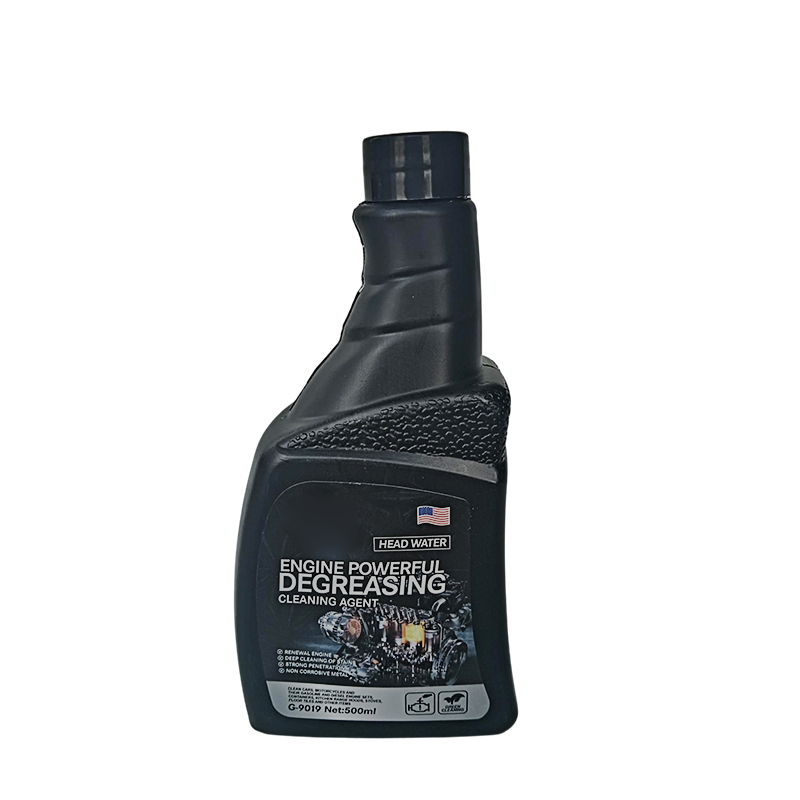
- Automotive Care: Custom-formulated carburetor cleaners, detail sprays, tire shine foams, and engine degreasers — each tuned for specific solvent strengths, foam cling times, and residue levels, across the automotive care line
- Household & Personal Care: Air fresheners, multi-surface cleaners, and insecticide sprays — each with custom fragrance loads, propellant systems, and spray patterns, across the household line
- Industrial Maintenance: Penetrating lubricants, anti-corrosion coatings, and electrical contact cleaners — each formulated for specific penetration times, film thicknesses, and dielectric strengths, across the industrial maintenance line
Our standard MOQ for custom formulation projects is 20,000 units, with a 7–15 day sample development cycle and a 15–20 day mass production window from order confirmation. Our partner factory holds ISO 9001, ISO 14001, UN packaging certification, CE, DOT, RoHS, SASO, and REACH — covering the regulatory requirements of every major aerosol import market.
For brands targeting the Saudi Arabian market, our SASO-ready certification streamlines customs clearance. For EU-bound products, our REACH-compliant formulations and documentation package eliminates the most common delay point in European customs. When a formula platform, artwork, and market paperwork are already in place, that timeline compresses hard: one European private-label client went from spec lock to on-shelf, with a full REACH documentation package, in six weeks — a sequence that takes four to five months when the plant, the lab, and the export desk sit in three different companies.
The R&D laboratory at our partner factory handles the full chain: concentrate development, propellant system selection, valve-and-actuator matching, accelerated stability testing, and pilot filling on the same production line that will run mass production. This matters because a formula developed on a lab bench sometimes behaves differently at scale — fill temperature, propellant charge pressure, and line speed all interact with the final product. A custom formula aerosol manufacturer that tests on the same line it produces on catches these issues before your first commercial batch ships.
The Real Cost of Generic Formulation
A brand that uses the same generic formula as six competitors is selling a commodity. Commodities compete on price. Brands compete on the experience that only a custom formula can deliver — the scent customers remember, the spray feel they prefer, the performance claim they repeat to friends.
The pattern repeats across the category. When a brand moves from a generic contract filler to a formula developed for its own product, the change shows up at the shelf: the can stops being interchangeable, and a customer who preferred it has a reason to come back. That is not a marketing statistic — it is the direct result of owning a formulation that no competitor could replicate at a lower price point.
If your current aerosol product is losing share to cheaper lookalikes, the formula is almost certainly the problem. Working with a custom formula aerosol manufacturer changes the equation — not by making your product cheaper, but by making it impossible to replicate at a lower price. The propellant ratio, the active concentration, the valve specification, the can lining — each of these is a barrier that a generic filler cannot copy without access to your specification sheet.
FAQ: Custom Formula Questions
What is the MOQ for a custom formula aerosol product?
Midwel's standard MOQ for custom formulation is 20,000 units. If you are not ready to commit to a custom program yet, our stock formulations start at 5,000 pcs — a common path is to launch a stock SKU, validate sell-through, then scale it into a 20,000-unit custom run.For brands testing market response with a pilot SKU, we can accommodate multi-variant launches within a single MOQ — for example, two scent variants at 10,000 units each — so you can gather real shelf data before committing to a full production run.
How long does it take to develop a custom aerosol formula?
From performance brief to locked specification, the typical timeline is 3–4 weeks. Lab formulation takes 5–7 days, sample production and shipping takes another 7–10 days, and 1–2 revision rounds add 7–10 days. Mass production follows in 15–20 days from order confirmation.
Can I bring my own formula and have you just fill it?
Yes. If you already own a formulation, the plant works as a toll filling partner rather than a custom formula developer, with Midwel coordinating the project from the export side. We still run compatibility testing between your concentrate and our can linings, valves, and propellant systems — because a formula developed for one packaging system does not always behave identically in another.
What propellant options are available for custom formulations?
We work with LPG blends (propane/isobutane), DME (dimethyl ether), HFC-134a, compressed air, and nitrogen. Each has trade-offs: LPG offers strong spray pressure and low cost; DME is water-miscible and enables water-based formulations; nitrogen is VOC-free but requires specialized valves for consistent output. Your custom formula aerosol manufacturer should recommend the propellant system based on your product's active ingredients, target spray pattern, and regulatory requirements.
How do you ensure formula confidentiality?
Midwel signs mutual NDA agreements before the formulation brief stage. Client-owned formulations are stored in segregated batch records. Base formulation IP developed during a project remains with Midwel, but the final product specification — including any client-requested adjustments to active concentrations, fragrance loads, or propellant ratios — is documented as the client's branded product.
Can I start small before committing to a custom formula?
Custom formulation is the destination, not the entry point. If you want to test the market first, stock formulations such as our air freshener, rust remover or engine degreaser ship from 5,000 pcs with your branding on the can. Once the SKU proves itself, the same plant moves it to a 20,000-unit custom formula — with the specification sheet staying yours.
Ready to develop a formulation your competitors cannot copy?- Get a Free Quote — share your product concept, target market, and performance goals, and our R&D team will propose a formulation roadmap.
- Request a Sample — evaluate our spray performance, scent profiles, and packaging quality before you commit.
---
*Last updated: September 2026*