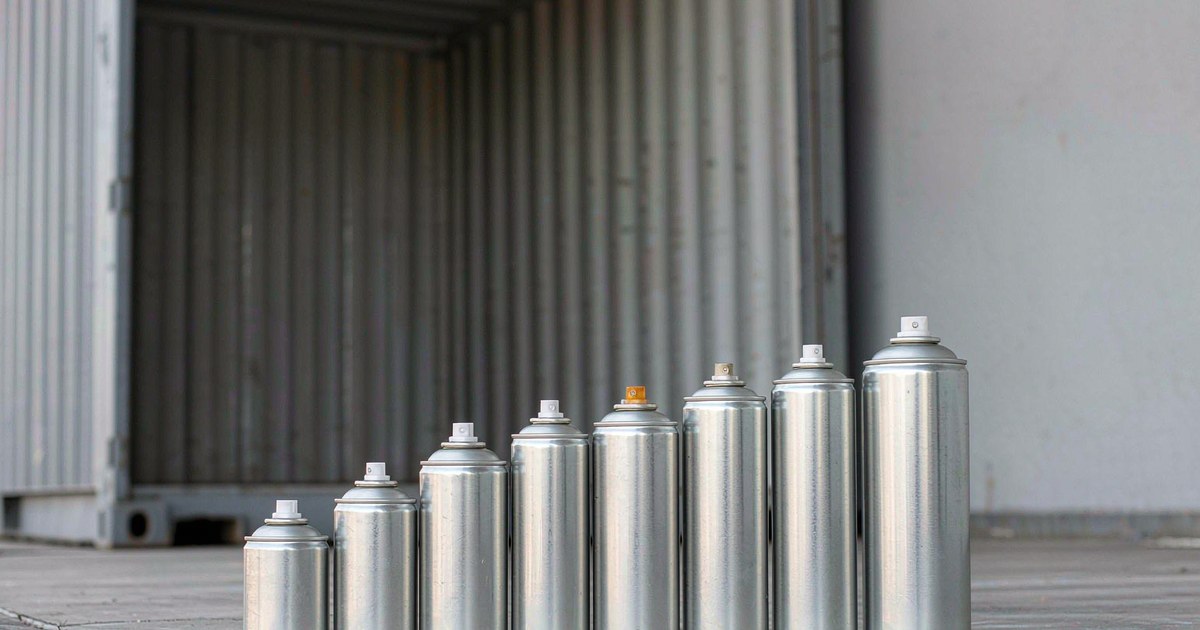
TL;DR
In short: On an aerosol can, the body you pick sets the capacity, the fill weight, the case, the pallet and the container, in that order. Choosing by shelf price alone is how a container load ends up 2,544 cans short of the plan.
- Capacity is bought with height: A 65 mm body carries everything from 400 ml up to the 700–750 ml sizes. Diameter is fixed at 45, 52, 57 or 65 mm, and volume comes from barrel length.
- The case is what costs you: Moving from a 450 ml to a 620 ml can can keep the same 24-count case layout while the case grows from 0.022 to 0.024 m³ — and the container does not grow at all.
- Container maths: A 20 ft general-purpose box holds roughly 33 m³, of which about 28 m³ is actually usable by full cartons. A 40 ft high-cube takes about 68 m³.
- Density, not just count: The 300 ml can puts the most units in a container at 36,120, while the 620 ml case carries the most product at roughly 17,350 litres.
- Neck finish: Nearly every general-purpose can uses a 1-inch (25.4 mm) finish. A crimp that is out of tolerance does not fail on the line — it leaks days later, on a pallet in a warm warehouse.
- What the chart cannot tell you: Two products in the same 450 ml body ship at different weights, because a solvent-based formula and a water-based one do not fill to the same mass, and destination VOC limits can cap the fill before the can is full.
A first-time brand owner picks a 450 ml can because the shelf price works. Artwork is approved six weeks later. Only then does he ask how many cans fit a container, and the answer — 30,528 in a 20 ft, on 1,272 cases — sends him back to his freight quote, his pallet count and his case layout, all three already paid for. Aerosol can size chart decisions are not a packaging preference. The body you pick sets the capacity, the fill weight, the case, the pallet and the container, in that order.
What follows is the chart we send when a buyer asks for it: the capacities we fill, how the cans are packed, how many reach a container, and the four specifications that sit underneath all of it. Every pack figure is taken from our current production schedule rather than from a brochure. That is the reason the case counts are oddly specific and the containers all land within a rounding error of each other.
One caveat before the table. Pack data is only true for the body it was measured on and the case that body was measured into. Ask for a display carton, a shrink tray or a different diameter, and every number below moves with it.
The can body is chosen before the capacity
Aerosol can dimensions start with the body, not the capacity. Cans are drawn in a small ladder of standard diameters, and 45 mm, 52 mm, 57 mm and 65 mm cover most of the market. The two smaller bodies carry small-format products — air fresheners, single-dose treatments, sample sizes. The 65 mm body carries everything from a 400 ml can up to the 700–750 ml sizes, because capacity is bought with height, not width.
That distinction decides more than it looks like it does. Diameter fixes the case footprint and the pallet pattern. Height only changes how tall the case stands. So a buyer moving from a 450 ml can to a 620 ml can keeps the same 24-count case layout — and loses 2,544 cans per container, because the case grows from 0.022 to 0.024 cubic metres and the container does not grow at all.
Practical consequence: when a 65mm aerosol can supplier quotes you a new size, the first question is not the price per can. It is which body the price assumes, because the body is what your freight bill is calculated against.
The aerosol can size chart
These are the sizes we fill on the current schedule, with the pack data that goes with each. The figures come from the factory's packing schedule, so the container counts are exact for full-carton loads.
| Can capacity | Cans per case | Case dimensions (cm) | CBM per case | Cans per 20 ft | Cans per 40 ft HQ |
|---|---|---|---|---|---|
| 300 ml | 24 | 33 × 22.5 × 25 | 0.0186 | 36,120 | — |
| 450 ml | 24 | 40 × 26.5 × 20.7 | 0.022 | 30,528 | 74,160 |
| 480 ml | 40 | 56 × 35 × 25 | 0.049 | 22,840 | 55,480 |
| 600 ml | 16 | 41 × 26 × 28.7 | 0.031 | 14,448 | 35,088 |
| 620 ml | 24 | 41 × 28 × 21 | 0.024 | 27,984 | 67,992 |
| 750 ml | 24 | 41 × 27.5 × 36 | 0.0406 | 16,368 | 39,792 |
| 750 ml (foam) | 12 | 27.8 × 21 × 34.8 | 0.0206 | 16,308 | ~39,600 |
| 900 ml | 15 | 39.8 × 23.7 × 28 | 0.027 | 15,555 | 37,770 |
Read the last two columns down and the arithmetic behind every container quote becomes visible. A 20 ft general-purpose container has roughly 33 cubic metres of internal volume, but cartons cannot use all of it; about 28 cubic metres is what a full-carton aerosol load actually fills. Multiply any CBM per case above by the case count and you land between 27.7 and 28.0 cubic metres every time. A 40 ft high-cube takes about 68 cubic metres of cartons, which is the number that produces the 40 ft column.
Two things fall out of the chart that are worth naming. The 300 ml can puts the most units in a container — 36,120 — while carrying the least product, about 10,800 litres. The 620 ml can carries the most product per container of any size here, roughly 17,350 litres, because its case packs efficiently at 24 units and 0.024 cubic metres. If your margin is freight-led, that gap is not a rounding error.
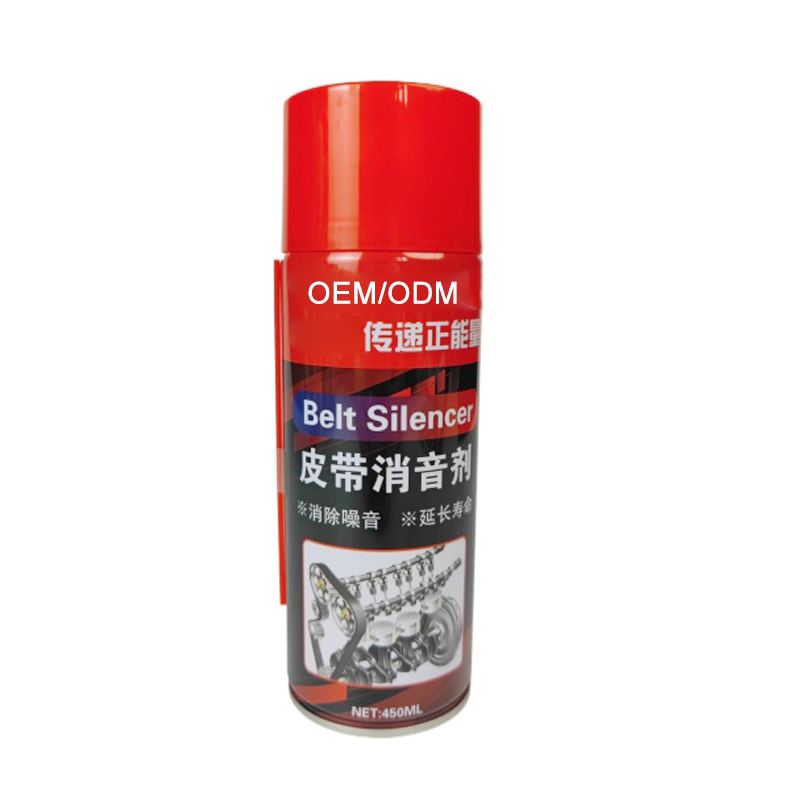
Three sizes account for most of what leaves the plant. The 450 ml case carries the workshop range — carburetor cleaner, rust remover, brake parts cleaner, belt silencer spray and the rest of the automotive line. The 620 ml case is the foam and polish size. The 900 ml case sits at the household end. A first order that mixes categories almost always starts on 450 ml, because it is the size with the widest range behind it.
Net content, fill weight and gross weight
Confusion starts when one number is asked to do three jobs. On an aerosol can, aerosol can net content and fill weight are different figures, and gross weight is a third.
| Figure | What it measures | 450 ml can, current schedule |
|---|---|---|
| Nominal capacity | The can body's stated volume | 450 ml |
| Net content | Contents declared on the can | 255–305 g |
| Gross weight | The filled can, ready to ship | 350–400 g |
The gap between the label's net weight and the filled can's gross weight is the can, the valve and the propellant. It is also why two products in the same 450 ml body ship at different weights: a solvent-based formula and a water-based one do not fill to the same mass, and VOC limits in your destination market can cap the fill weight before the can is full. Ask for the fill-weight tolerance in grams and the method used to check it — a tolerance without a measurement method is not a specification.
Neck finish: one inch, and why it matters
The aerosol can neck size that matters is the opening where the valve mounts, and nearly every general-purpose can builds it to a 1-inch finish — 25.4 mm across. That single standard is why valves, actuators and caps from different suppliers are interchangeable, and why you can move a product between filling lines without tooling the can again.
It also sets the limits. A standard 1-inch valve cup will not take the metered-dose valves used for pharmaceutical formats, and bag-on-valve constructions change both the neck and the internal geometry. If a project needs either, the can stops being a catalogue item and becomes a tooling project, with the lead time to match. The valve, actuator and propellant systems that sit on top of this neck are the subject of our aerosol can technology guide.
Crimp: the two numbers that decide whether a can leaks
The valve cup is held onto the neck by a crimp — a metal fold formed during filling, not during can manufacture. Two figures come out of it: crimp diameter, the finished width of the fold, and crimp height or depth, how far it is pressed down.
A crimp out of tolerance does not fail dramatically. It weeps. The leak appears days later, on a pallet in a warm warehouse, which is the worst place to find it and the most expensive one. So the aerosol crimping specification for your project should name both numbers and the tolerance, and your filling QC should record them at a defined interval rather than trusting the setup at the start of the shift. When you audit a filling quote, ask which of the two is checked continuously and which is sampled — a supplier who cannot answer that question has not thought about it.
Crimp quality sits next to a second test with a different owner. The aerosol can pressure test belongs to the can maker: empty bodies are proofed and burst-tested to a multiple of working pressure before they leave the plant, and the certificate for that test travels with the shipment. The filler's equivalent is the hot-water bath that every filled can passes through, which finds a bad crimp or a weak seam before the goods do. Both exist, and a quote that mentions neither is quoting the filling only, not the can.
Lining: solvent formulas and water-based formulas
The three aerosol can lining types are plain tinplate, a single internal lining and a double lining. Solvent-based formulas are usually run in plain or lightly coated tinplate; the solvent does not attack steel at the timescales involved. Water-based formulas are a different case. Water plus bare tinplate plus storage equals rust, and the failure shows up as discoloured product, a swollen can or a pinhole that reaches your customer rather than your warehouse.
The rule of thumb we apply: if the formula is more than a trace of water, plan on an internal lining, and test it against the actual concentrate rather than against water. Acidic formulas and products carrying certain actives need the same treatment. Compatibility testing before the first production run costs a few hundred grams of concentrate; finding out on a loaded pallet costs a container.
Print and decoration on a curved surface
Aerosol can print decoration usually happens before the can exists — flat tinplate sheets are litho-printed and then drawn into a cylinder, which means the artwork has to survive being stretched. The printable arc on the finished can is narrower than the circumference, both because the sheet seam is not printable and because the drawn area distorts what was printed flat.
Three practical rules come out of that. Artwork that wraps the full circumference will not survive; design to the printable arc and confirm it on an actual proof. Fine hairlines and small reversed-out type are the first things to fill in or break up, so keep the smallest type legible at arm's length. And colour is a moving target: two batches of the same Pantone are not identical on steel, so what you approve should be a physical printed can, not a screen preview. Weighing a printed can against a pressure-sensitive label or a shrink sleeve before the artwork is finalised is cheaper than changing the decision later; our custom filling walkthrough sets out where that choice lands in the quote.
How many cans fit a pallet, and how many fit a container
The container half is answered by the chart above. The pallet half needs an assumption, because pallets differ by market. Take the 450 ml case, at 40 × 26.5 × 20.7 cm, on a standard 1200 × 800 mm pallet. Three cases fit along the long side and three along the short, so nine cases to a layer. At a normal 1.8 m load height that is seven to eight layers — 63 to 72 cases, or roughly 1,500 to 1,730 cans per pallet.
Now the part that costs money. Nine cases on a 1200 × 800 mm pallet cover 9 × 0.106 = 0.95 square metres of a 0.96 square metre pallet, so the layer is efficient; the loss is in the height. Layers of 20.7 cm cases cannot fill the space between the top of the last full layer and the carrier's height limit, and a pallet plus its own 15 cm of timber takes volume the cartons would otherwise use. That is why full container loads are usually stuffed loose and pallets are reserved for LCL and for warehouses that need to move stock with a forklift.
Your aerosol shipping cost per container is set by two numbers and one surcharge. Freight for a full container is charged per container, so the case count above is the only lever you have; for less-than-container loads it is charged on cubic metres, and the CBM per case column becomes the number you multiply. On top of both sits the dangerous goods surcharge, because aerosols ship as Class 2.1 when the contents are flammable — the same classification that governs the documents, and the subject of our UN 1950 classification guide.
What the size you pick costs you in calendar days
Aerosol lead time from China is not set by the filling line. A line fills tens of thousands of cans in a shift; the wait is in everything upstream of it. Artwork has to become a print proof on real tinplate. The proof has to be approved physically, not on a screen. The printed cans have to be manufactured and delivered to the filling plant.
Standard runs therefore land in the range of 15 to 20 days of production from order confirmation, plus 3 to 7 days for QC, documentation and loading, and that range is a function of your response time as much as the factory's. Sign off quickly and you load at the early end. Sit on a colour approval for two weeks and you have moved the whole schedule — the step-by-step calendar is set out in our guide to bulk aerosol orders. Choosing a size that needs new tooling inserts a step in front of the whole sequence; choosing one from the chart above does not.
What this chart cannot tell you
The figures above describe round tinplate cans in full-carton loads, and nothing else.
They are not a quotation. Freight rates, the dangerous goods surcharge and raw-material prices all move, and a container quote that ignores the current rate is a number, not an offer.
They do not cover aluminium cans, bag-on-valve or barrier packs. Those constructions change the body, the case and often the filling line, and they need their own pack data.
They describe cases as they leave the factory. A display tray, a shrink pack or retail-ready packaging changes the count per case and therefore every container figure here.
And they say nothing about your market's rules. Label content, hazard pictograms and registration duties are set by the destination, not by the can, and the compliance half of the picture is in our aerosol regulations overview.
FAQ: questions buyers ask before they commit a size
Can the same can body take a different fill weight?
Yes, within limits. The body is fixed, so a lighter fill leaves headspace and a heavier one requires more propellant. Both change the gross weight, the case weight and often the shipping cost. What you cannot do is exceed the fill the body and valve were tested for.
How many cans fit a 40 ft container?
Roughly double the 20 ft figure. A 40 ft high-cube takes about 68 cubic metres of cartons against the 20 ft's 28, so the same 450 ml can goes from 30,528 units to 74,160. It is not exactly double, because the 40 ft still carries the same door and the same wooden floor as a constraint.
Does the case count change if I use a display carton?
Almost always. A display tray reduces the number of cans per outer case and leaves air where the tray has to sit square. Budget for a lower container yield whenever retail-ready packaging is involved.
Do the cans leave the factory palletized?
Only if you ask, and only if the destination needs it. Loose stuffing puts more cans in the container; pallets make the load easier to handle at the far end. The choice is usually made by who receives the goods, not by the factory.
Are these sizes available with any formula?
The body and the fill weight are separate decisions. A 450 ml can will run a solvent-based or a water-based formula, provided the lining is matched to the concentrate. That matching is a test, not an assumption.
Send us the shelf price you are working towards and the market you are shipping to, and we will tell you which can size carries it, what the case looks like, and how many of them reach a container. If the OEM-versus-ODM question is still open, settle that one first — how the two routes differ comes down to who owns the formula. Sizing is the shorter conversation either way.