TL;DR
In short: A private label air freshener is eight decisions rather than one product: fragrance load, propellant, can format, valve, compliance route, artwork, run size and testing. Leave any of them open and the factory fills the gap with its own assumption.
- Fragrance: Typically 0.5–3.0% of the formula, and most of what the customer actually perceives. Judge it on the can rather than on a blotter card, and get an IFRA certificate of conformity and an SDS from the fragrance house.
- Propellant decides compliance: A classic solvent formula with 30–35% LPG cannot legally ship to California at all, where manual aerosol air fresheners are capped at 10% VOC by weight, falling to 5% in 2027.
- Can and valve: 57 mm and 65 mm carry the 250–300 ml formats that dominate supermarket shelves. The V57 standard valve with a fine-mist actuator covers most air freshener sprays; a 360° valve matters for under-shelf use.
- Labelling: EU labels must declare any of the 26 recognised fragrance allergens above threshold concentrations. This is checked at the border, not at the design stage.
- Which model to start with: For a first launch, private label usually wins on sampling speed, tooling cost and the compliance documents that already exist from earlier runs.
- What preparation buys: A tighter price spread and a cleaner first container. It does not make a weak scent direction sell, and it will not cover artwork that arrives late.
The first email usually lands on a Tuesday, and it reads like this: "We run a home-fragrance brand in the Gulf. We want our own air freshener spray — lavender, 300ml, our logo on the can. What do you need from us?" I have answered enough versions of this email to know what happens next. The buyer collects quotes, and the numbers spread two- or three-fold for what he believes is the same product.
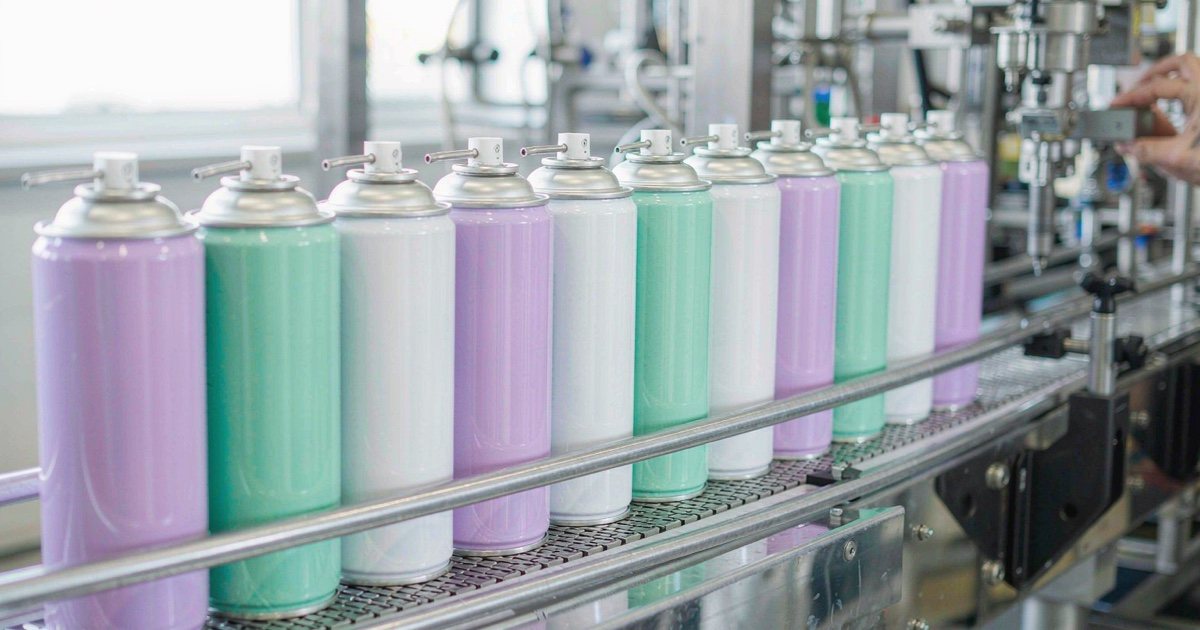
The spread is not gouging. It reflects eight decisions the buyer has not made yet: fragrance load, propellant, can format, valve, compliance route, artwork, run size, and testing. A private label air freshener spray puts your brand on a filling line the factory already runs — you choose the scent, the can, the valve, and the artwork, and the factory supplies the line, the certificates, and the export paperwork. Lock those choices before the deposit and you buy at factory economics. Leave them open and every factory fills the gaps with its own assumptions, which is where the price spread and most first-order disappointments come from.
This playbook is the checklist we wish every first-time buyer worked through before asking for a quote.
Why This Category Rewards Preparation
Air fresheners are one of the quiet workhorses of the aerosol industry. According to the European Aerosol Federation (FEA), European plants filled 3.46 billion aerosol units in 2024 — up 4.2% from the year before — and air fresheners were the largest subgroup within household sprays at roughly 214 million cans (Packaging Journal's summary of the FEA data). Short development cycles, repeat purchases, and strong shelf presence make the category a natural first launch for retail chains, home-fragrance brands, and distributors building a house label.
That accessibility cuts both ways. Because almost any aerosol factory can fill an air freshener, buyers who arrive without specifications get quoted for whatever the factory had on the line last month. The preparation is what buys you the product you actually designed.
What "Private Label" Covers at an Aerosol Factory
Private label is not a smaller version of OEM. In a private label project the factory starts from a platform it already runs — proven formula bases, stocked can formats, standard valves — and adapts it to your brand. In an OEM project the buyer usually arrives with a formula and the factory builds production around it. For a first launch, private label is usually the right entry: faster sampling, lower tooling cost, and compliance documents that already exist from earlier runs.
The division of labor is worth spelling out, because it is where expectations break:
- The factory supplies: the formula base and fragrance blending, cans and printing, valves and actuators, filling and QC, the SDS, and dangerous goods export documentation.
- You supply: the brand, the target market (which decides the compliance route), the fragrance direction, print-ready artwork, and the final sign-off on samples.
A factory that fills two hundred million cans a year has already made every mistake on this list once. Use that. The eight decisions below are where a buyer's homework turns into a better price and a cleaner first container.
The Eight Decisions to Lock Before the Deposit
| # | Decision | Typical range / spec | What goes wrong when skipped |
|---|---|---|---|
| 1 | Fragrance load and profile | 0.5–3.0% concentrate | Scent fades within months; propellant strips the top notes |
| 2 | Propellant and base system | LPG, DME, or compressed air | Formula blows past the CARB 10% VOC limit for California |
| 3 | Can format and lining | Tinplate 52/57/65mm, 150–300ml | Corrosion or lining failure with water-based bases |
| 4 | Valve and actuator | V57 standard, fine-mist or foam | Wrong spray character; gasket swelling with DME |
| 5 | Compliance route | CARB / CLP / UN 1950 | Container held at customs; relabeling after arrival |
| 6 | Artwork and print method | 6-color offset on tin, or sleeve | Colors shift on metal; barcodes fail retail scanning |
| 7 | MOQ and variant plan | 20,000 units per SKU | Changeover costs quietly destroy unit economics |
| 8 | Sampling and stability test | 7–15 days plus 50°C oven test | Off-odors and leakers discovered after shipment |
1. Fragrance: Judge It on the Can, Not on a Blotter
Fragrance is 0.5–3.0% of the formula and carries most of what the customer actually perceives. The common mistake is choosing a scent from blotter cards in a fragrance house library and never smelling it again until the container arrives. Propellant changes the scent. LPG carries a faint hydrocarbon odor; the same concentrate sheared through a fine-mist actuator opens differently than it does on paper; and top notes fade fastest in storage. Ask for the trial fill in the real can with the real valve, then judge it at day one and day thirty.
Paperwork matters here too. Require an IFRA certificate of conformity and an SDS from the fragrance supplier, and if the EU is your market, remember that labels must declare any of the 26 recognized fragrance allergens above threshold concentrations.
2. Propellant and Base: The Decision That Decides Your Compliance
Three systems dominate. LPG blends (propane and isobutane) are the cheapest and give the most consistent spray pressure — the default for solvent-based air fresheners. DME (dimethyl ether) is water-miscible, which makes water-based formulas possible, but it swells standard nitrile gaskets, so the valve specification has to change with it. Compressed air or nitrogen costs more per can and sprays softer, but it is the zero-VOC path that eco-positioned brands increasingly ask for.
The compliance math is unforgiving. California's consumer products regulation caps manual aerosol air fresheners at 10% VOC by weight as of January 1, 2023, falling to 5% in 2027, with concentrated products at 15% and automatic-dispenser products at 30%. Several other states adopt California's limits. A classic solvent formula with 30–35% LPG propellant cannot legally ship to California at all. Decide the market first, then let the propellant follow.
3. Can Format: Diameter, Volume, Lining
Household aerosols run mostly on tinplate. A 52mm can suits slim 150–200ml formats; 57mm and 65mm carry the 250–300ml volumes that dominate supermarket shelves. Aluminum costs more and suits premium positioning — it is seamless, lighter, and takes high-gloss print well. The detail buyers rarely ask about is the inner coating: an epoxy-phenolic lining is standard, but water-based bases are harder on linings than solvent ones, and a compromised coating shows up months later as rust at the seam. Get the lining specification in writing, especially if your formula is water-based.
4. Valve and Actuator: Where Spray Character Lives
The V57 standard valve with a fine-mist actuator covers most air freshener sprays. A foam valve turns the same formula into a shaving-cream foam that clings to surfaces — a different product on the same platform. A 360° valve sprays at any angle, which matters for under-seat and under-shelf use. Within the standard valve, the stem orifice diameter and actuator geometry decide droplet size and spray cone. Two factories can fill the identical concentrate and deliver visibly different products because one of them cared about the actuator.
5. Compliance: Sequence It Market First
The document set is predictable: a 16-section SDS, CLP-compliant labeling with the flammable-aerosol pictogram for Europe, REACH conformity for EU chemical supply, SASO for Saudi Arabia, and UN 1950 Class 2.1 dangerous goods paperwork for every shipment. The sequence is where buyers lose time. Market choice drives propellant choice, propellant drives the SDS, and the SDS drives the label. Reverse the order and you reprint labels mid-project. A factory running its own export desk prepares the UN packaging certificates and dangerous goods declarations in parallel with production instead of after it.
6. Artwork: Proof It on Metal
Offset printing on tinplate handles up to six colors and delivers the finished-can look buyers want, but colors shift on a metallized surface — a brand blue that prints perfectly on paper proof can come off the can noticeably darker. Insist on a printed can proof, not a digital mockup. Shrink sleeves are the alternative when the design needs photographic gradients. And check the barcode: retail scanning failures at the port of arrival are a costly way to learn that the artwork file was low-resolution.
7. MOQ and Variants: Plan the Run Around the Line
Twenty thousand units per SKU is the working floor for a custom private-label air freshener run, and the reason is physical: between two fragrances the filling line gets flushed and cleaned, a changeover that takes hours and produces scrap cans that somebody pays for. Spread that cost across fewer cans and the unit price climbs past what a distributor will pay. If you are not ready to commit to a custom run at all, stock lots from 5,000 pcs in a stocked can format let you test the market first. The practical move for a test launch is a multi-SKU run — three scents at 7,000 units each teaches you more about your market than one scent at 20,000, and it fits inside a single production campaign.
8. Sampling and Stability: The Two Tests You Cannot Skip
Sampling runs 7–15 days from a confirmed brief. The cans that matter are the ones that come back from the lab: water-bath leak testing at 50°C, spray-pattern checks against a template, and accelerated stability storage where the filled can sits in a 50°C oven and gets re-checked over the following weeks for pressure drop, off-odor, and corrosion. A sample that smells right on day one says almost nothing about month six on a warm shelf. Approve mass production only after the stability window — and if a factory offers to skip it to save time, treat that as a statement about the factory.
From Approved Sample to First Container
With the eight decisions locked, the calendar is short: 7–15 days to samples, one to two weeks of feedback and spec lock, 15–20 days of mass production with UN documentation running in parallel, then sea freight by lane. A European private-label brand we worked with took its air freshener line from first brief to launch in six weeks — but only because the formula platform was already certified for REACH, the artwork was print-ready on day one, and the market documentation existed from earlier runs. That is what the checklist buys. When the buyer's side is ready, the calendar compresses; when it is not, every open decision adds its own delay.
How Midwel Runs Private Label Air Freshener Programs
Our manufacturing partner's plant covers 98,796 m² and fills more than 200 million cans a year across three product lines, with household aerosol sprays — air freshener sprays among them — running on dedicated filling lines. The air freshener platform covers solvent-based and water-based bases, fragrance blending from 0.5% to 3.0% loads, tinplate formats from 52mm to 65mm, and the standard valve family: V57 fine-mist, foam, and 360° actuators.
For private label clients the service runs end to end: fragrance selection and blending, packaging design, filling, and dangerous goods export — UN packaging certificates, commodity inspection, customs clearance, and sea or land freight arranged by our own export desk rather than a third party. Quality and compliance sit on ISO 9001 and ISO 14001 systems with UN, CE, DOT, RoHS, SASO, and REACH certifications covering the documentation your target market will ask for. The numbers that shape your planning: MOQ from 20,000 units per SKU, samples in 7–15 days, mass production in 15–20 days. The plant behind this platform has been producing aerosol cans since 2003, serves 25 major OEM clients, and ships to more than 50 countries — with 13 core markets served on repeat. The OEM/ODM process page walks through the same steps described above.
The Next Step
Bring answers to the eight decisions — or bring the gaps and let the factory recommend against them in writing. Either way, the quote you get back will reflect a real product instead of an assumption, and your first container will hold what you designed. Get a free quote with your target market, fragrance direction, and volume, or request a sample to judge the filling quality, spray pattern, and print finish on your own desk before committing to production.
FAQ: Private Label Air Freshener Spray
What is the MOQ for a private label air freshener spray?
Stock lots start at 5,000 pcs in a stocked can format — the fastest way to test a market before you commit to a custom run. A private-label run with your own artwork starts at 20,000 units per SKU. Multiple scent variants can be combined into a single production campaign, so the fragrances share one changeover instead of paying for it separately. Below 20,000 units the changeover cost between fragrances has to be absorbed by fewer cans, and the unit price rises to the point where the per-can economics stop making sense for a retail margin.
What VOC limit applies to air freshener sprays sold in California?
Manual aerosol air fresheners are capped at 10% VOC by weight for products manufactured on or after January 1, 2023, with the limit falling to 5% in 2027. Concentrated aerosol air fresheners sit at 15% and automatic-dispenser products at 30%. Several other states follow California's rule, so a 10%-compliant formula is the safe specification for the US market as a whole. The practical path to 10% is a water-based base with a reduced solvent load and either minimal LPG or a compressed-air propellant.
Can I supply my own fragrance for a private label run?
Yes, and many brands with an existing fragrance identity do. The factory needs three things from your fragrance house: the concentrate itself, an IFRA certificate of conformity, and a current SDS. The lab then runs compatibility testing on your chosen valve, gasket, and can lining — DME-system fragrances in particular behave differently against standard gaskets — before the trial fill. Budget one to two weeks for that testing in the project plan.
How long until my first shipment arrives?
A realistic first-order timeline: 7–15 days for samples, one to two weeks for your evaluation and spec lock, 15–20 days for mass production with export documentation prepared in parallel, then sea transit depending on the lane — roughly three to five weeks to most destination ports. That puts a typical first private label order 10 to 14 weeks from confirmed brief to arrival. Brands whose formula platform, artwork, and market paperwork are ready on day one can compress this substantially; the six-week launch mentioned above is what that looks like.